Aviamasters vs Aviator: how the two crash games actually differ
In this piece
- The differences, one table
- Where the biggest myth dissolves
- What this means for a session
- Mistakes to avoid when comparing
- Which belongs to whom
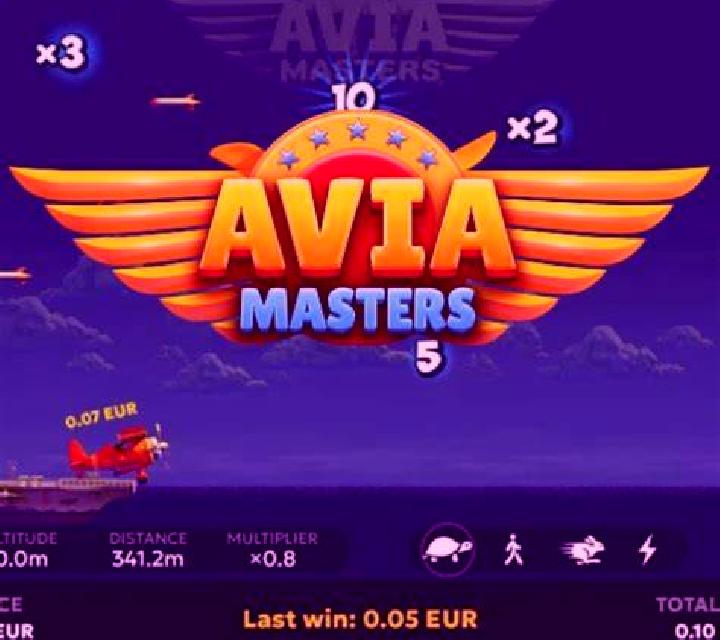
Aviamasters by BGaming and Aviator by Spribe are the two most recognisable titles in crash-game lobbies, and both print a 97% RTP on their cards. The resemblance survives about one minute of play. The real difference sits in who holds the decision: what fixes your win, when, and what the route does to your balance in between.
The differences, one table
| Criterion | Aviamasters (BGaming) | Aviator (Spribe) |
|---|---|---|
| Round end | Carrier landing or water crash | Random crash point, plane “flies away” |
| Your decision in-round | Stake plus one of four speeds | A Cash Out click before the crash point |
| Manual cash-out | None — payout on landing | Yes, plus target-based auto cash-out |
| Route events | Multipliers +1/+2/+5/+10, x2–x5, rockets | Only the rising multiplier |
| Rockets | Halve the Counter Balance, round continues | No separate rocket events |
| Bets per round | One; 0.10–1000 per reviewer data | Two independent panels, each with its own exit |
| Volatility | Low (medium-low in the sequel) | Shaped by the cash-out targets you set |
| RTP and top | 97%, x250 max, €250,000 cap | 97% |
Two clarifications. Read the volatility row for Aviator honestly: the base distribution is fixed, and the felt swing depends on where you set your auto-target — frequent small locks or rare long rides. And the Aviamasters bet row closes with reviewer data, because the official card publishes no range.
Where the biggest myth dissolves
New players arrive at Aviamasters looking for the familiar Cash Out button and search the interface for it. It is not there — not hidden, not disabled: the construction has no manual exit. A round plays out to its event. A carrier landing credits the accumulated Counter Balance; the water zeroes the stake; no mid-flight click changes the outcome. Rockets, which Aviator does not have, cut the balance in half and push the trajectory lower while the flight continues — there is no crash point that ends things instantly either.
Aviator's contour is the inverse. The multiplier grows from takeoff, and every piece of your agency concentrates in the exit moment: click before the crash point and it counts; hesitate and it is a zero. The two independent panels turn one round into two bets with different aims, and auto cash-out hands the click to the machine. Calling one contour "fairer" than the other is a pointless argument — both print 97% RTP. They are fair in different ways.
What this means for a session
The difference shows up in rhythm. In Aviamasters you set the pace once, before the round: speeds reshape the flight's length, autoplay with stop conditions removes the routine, and the round's substance becomes watching the boost collection and the rockets. A bad round is water after a rocket pair; a good one is a landing with a stacked route, paid out against the summed balance, pop-ups at x20, x40 and x80 included.
The wrapping deepens the background feel of a session. The four speeds span an unhurried cruise to turbo, so the player chooses how many rounds fit into an evening; autoplay with win and loss stop-conditions turns a long series into a background process with exit points. Aviator has automation too — a target-based auto cash-out and repeated bets — but the final decision keeps returning to your hands: the target is settable, the moment of the exit is still felt personally.
In Aviator, rhythm lives in your hands. Each round contains at least one tense decision, and the high of catching a top multiplier is priced in nervous energy: the late click, the hand that twitched at 1.9x before the plane ran to 10x. Aviator regulars talk about click discipline; Aviamasters regulars talk about speed choice. The agitation sits in different places.
Mistakes to avoid when comparing
The first mistake is hunting for a "hidden" cash-out in Aviamasters. There is none, and not because it is buried in settings: the design has no manual exit, in any speed mode, on any device. A player who spends an evening looking for the missing button misses what is actually available — the speed choice, the stake, and the series settings. A round ending at a moment you did not choose is not a bug, it is the construction.
The second mistake is carrying over the double-panel habit. Two panels with different targets genuinely reshape the session's variance in Aviator without touching the expected value — but Aviamasters has nothing to reproduce the trick with: one bet per round, and the payout spread is set by the flight, the collected boosts and the landing. Variance management here lives in speed choice and session length, not in the number of simultaneous bets.
The third mistake is judging generosity off a single day of live counters. Both cards print 97% nominal, and short windows on any product wobble by single percentage points in either direction. Weeks and months speak to the money; a lucky or hostile Tuesday does not. The gap between nominal and the seven-day counter belongs to its own analysis — the practical moral is simple: do not draw conclusions from noise.
Which belongs to whom
Aviamasters goes to players who prefer not to decide in every round: low variance, steady tempo, a structure with no contested button. Aviator goes to players who value control of the moment and a double panel, as long as slipped tops are a cost they accept on purpose. If you are torn, both games almost always run in demo — five minutes each beats hours of other people's conclusions, and your own minutes will outrank any table here.
One point deserves separate weight, because it outranks everything above: trust in the venue beats the choice between two games. Either mechanic breaks on a crooked operator, and the breakdown of the warning signs lives in the safety review — start there if trust is your deciding criterion, not in a lobby.
Last thing. The gap between the BGaming family and Aviator widens with each release: the sequel already runs a higher cap, its own booster set and a buyable landing bonus on an island map. The summary of what is new sits in the sequel overview — a separate piece, with details on every booster. Our closing line stays short: pick not the game but the round shape you are comfortable being wrong in.
Related materials
Aviamasters 2 review: the sequel, from the landings to live data
A full review of Aviamasters 2: island landings, four boosters, the 50x Safe Landing buy, x1000 and…
2026-10-06
Aviamasters safe review: is the crash game legit and what protects you
A candid Aviamasters safety review: operator licensing, the gap between 97% RTP and the observed…
2026-09-21
Aviamasters demo: free play mode, what it teaches and what it cannot
An honest look at the free Aviamasters demo: BGaming's official PLAY DEMO on virtual credits, and…
2026-06-23
Aviamasters how to play: round rules, landing and no cash-out
How a full Aviamasters round actually works: wager, counter balance, boosts, rockets and the…
2026-06-08